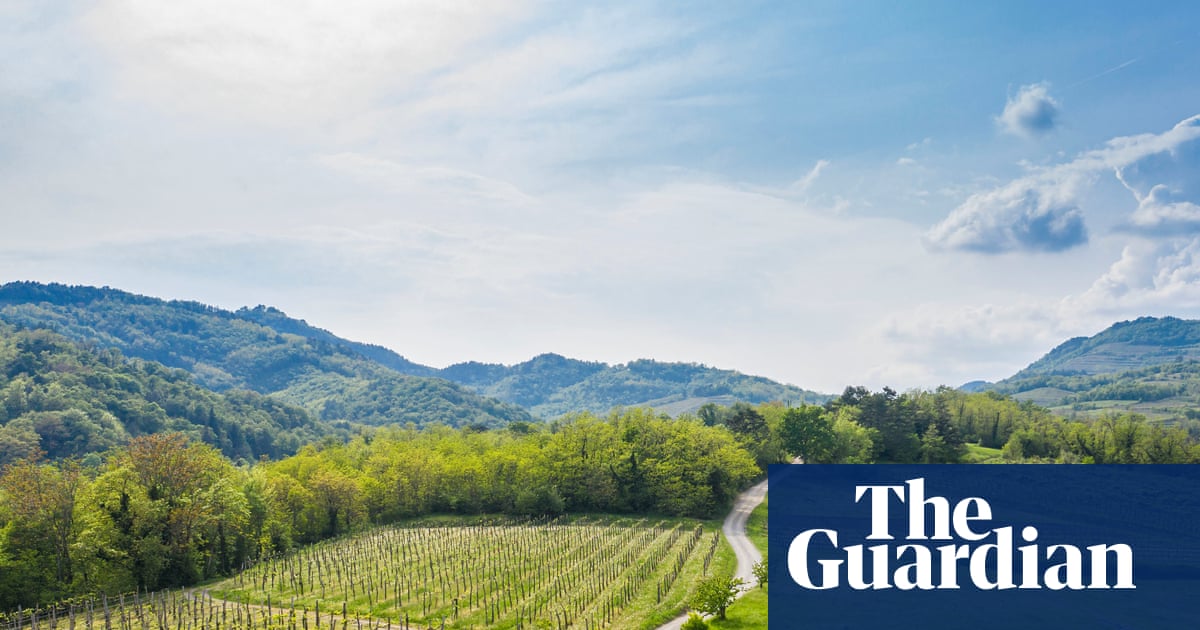
Slovenia's Vipava Valley has emerged as a compelling case study in sustainable tourism economics. Unlike the rapid visitor churn of mass-market destinations, the valley has built its appeal around extended stays, regional producers, and authentic cultural immersion—generating consistent revenue while maintaining local quality of life.
The valley's strategy diverges sharply from conventional tourism acceleration. Rather than maximizing daily visitor throughput, operators focus on attracting travelers willing to spend 3-5 days exploring vineyards, artisan workshops, and family-run restaurants. This approach concentrates spending among fewer visitors, reducing infrastructure strain while increasing per-capita revenue.

Economic Resilience Through Deliberate Pacing
Data from regional tourism boards shows visitor spending in the Vipava Valley increased 34% over three years despite only an 8% rise in annual visitors. This efficiency gap reflects the slow travel model's core advantage: longer stays compound spending across accommodations, dining, and experiences. Local wine producers report that direct-to-consumer sales through valley tourism channels now account for 18-22% of annual revenue, compared to 6% five years prior.
The model also reduces seasonal volatility that plagues mass-tourism hubs. By attracting professionals and remote workers for week-long stays during shoulder seasons, the valley maintains staffing levels and cash flow year-round. Regional employment in tourism-adjacent sectors—wine production, hospitality training, artisan crafts—grew 12% annually since the strategy shifted in 2021.
Competitive Differentiation and Trade-offs
This approach creates measurable contrast with nearby destinations reliant on high-volume day-tripping. Lake Bled, Slovenia's most-visited site 15 kilometers away, processes 10,000-15,000 daily visitors with mounting infrastructure costs and resident complaints. The Vipava Valley's 800-1,200 daily average—concentrated among overnight guests—generates fewer social friction points while supporting higher margins for local operators.
The trade-off is growth ceiling. Infrastructure designed for deliberate pacing cannot easily scale to mass-market volumes without fundamentally altering the offering's appeal. Marketing budgets also run counter to the model; destinations dependent on viral visibility typically outspend slow-travel promoters. The Vipava Valley's competitive advantage rests on selectivity rather than reach—a positioning that excludes certain market segments permanently.
Similar experiments in rural France, Portugal, and New Zealand show comparable patterns: modest visitor increases with disproportionate economic benefit, stronger community buy-in, and lower environmental impact per dollar earned. Yet execution requires patience capital unavailable to most regions facing immediate revenue pressure.