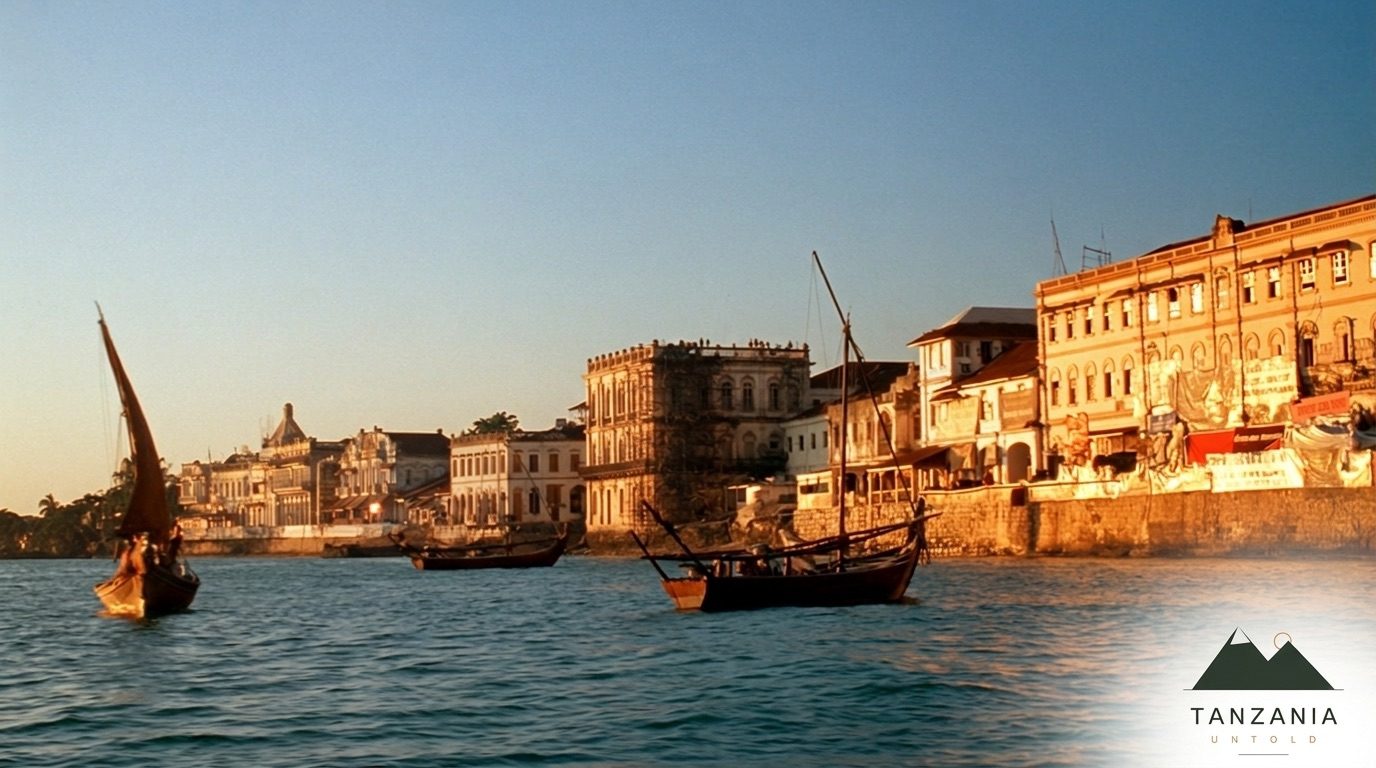
Step off the ferry at Stone Town and the smell hits before the view does: cloves, sea salt, frying cassava, and the diesel tang of dhows bobbing in the harbor. Zanzibar, the archipelago floating just off Tanzania's coast, has spent centuries as a crossroads for Swahili traders, Omani sultans, Portuguese sailors, and British colonists, and it wears that history openly. But most travelers come for a simpler reason: the water here is the kind of turquoise that photographs badly because no camera believes it. Between the coral reefs, the spice farms, and the labyrinth of Stone Town's alleys, Zanzibar offers a version of Tanzania that feels entirely different from the mainland's savannas, and pairing the two is one of the best decisions a visitor can make.
Stone Town's Living History
Stone Town, Zanzibar City's old quarter, is a UNESCO World Heritage site built from coral rag and lime mortar, its narrow streets deliberately shaded from the equatorial sun. Getting lost here is not a risk but a plan; the carved wooden doors alone, studded with brass spikes in a style borrowed from Gujarati traders, are worth an afternoon of wandering. The House of Wonders, once the tallest building in East Africa, sits near the old fort and the site of what was, until 1873, one of the largest slave markets on the Swahili coast. A visit to the Anglican cathedral built on that site is sobering and essential, a reminder that Zanzibar's wealth as a trading hub was built partly on a brutal history the island does not hide from visitors.
At dusk, Forodhani Gardens along the waterfront turns into a night market where vendors grill octopus, king fish, and Zanzibar pizza, a stuffed, fried flatbread that has nothing to do with Italy and everything to do with local ingenuity. Eating dinner here while the sun drops behind moored dhows is, for many travelers, the single most memorable evening of a Tanzania trip.
Beaches Beyond the Postcard
The east coast beaches around Jambiani, Paje, and Bwejuu draw the postcard crowd, and deservedly so: pale sand, warm shallow lagoons at low tide, and a wall of surf breaking on the outer reef. Paje in particular has become East Africa's kitesurfing capital, with steady trade winds from June through October and enough schools that beginners and experts share the same launch beach without much friction. Nungwi and Kendwa, on the northern tip, offer deeper water for swimming at any tide and some of the island's liveliest sunset bars, a contrast worth building into an itinerary if the east coast starts to feel too tranquil.
Offshore, Mnemba Atoll protects one of the healthier coral reef systems in the region, and diving or snorkeling trips there routinely turn up green turtles, reef sharks, and, if the season is right, passing pods of dolphins near Kizimkazi to the south. None of this requires the full liveaboard commitment of a dedicated dive trip; most lodges arrange half-day boat excursions that fit easily around a beach holiday.
The Spice Islands, Tasted
Zanzibar earned the nickname Spice Island for good reason. Omani and later colonial planters turned the interior into a clove-growing powerhouse in the nineteenth century, and small farms still grow cloves alongside nutmeg, cinnamon, black pepper, cardamom, and vanilla. A spice farm tour outside Stone Town, ideally at a family-run operation rather than a large tourist plantation, is less a garden walk than a tasting menu: guides crush leaves and bark underfoot, hand over cinnamon bark still warm from the sun, and usually finish with fresh fruit and a demonstration of how quickly a banana leaf becomes a woven hat or tie.
That spice trade shows up on every plate. Zanzibari cuisine leans on coconut milk, cardamom-scented rice, and grilled seafood marinated in a masala that reflects the island's Omani and Indian influences as much as its African roots. Biryani here tastes noticeably different from mainland versions, and a proper Zanzibar mix, a curried street-food stew of cassava, plantain, and bhajia fritters, is worth seeking out over the more tourist-facing pizza stalls.
Getting There and Getting Around
Zanzibar's Abeid Amani Karume International Airport takes direct flights from several European hubs and connects easily to Dar es Salaam and to safari circuits like the Serengeti and Ngorongoro Crater, making an island add-on to a mainland safari straightforward to arrange. The ferry from Dar es Salaam is a cheaper option for travelers already on the coast, though rough seas can make the two-hour crossing uncomfortable. Once on the island, taxis and pre-arranged transfers are the most reliable way to move between Stone Town and the beach areas; renting a scooter is tempting but road conditions and traffic norms reward caution.
The best window to visit runs from June through October, when the long rains have passed and the kitesurfing winds pick up, though the short rains in November bring lush green landscapes and lower prices for travelers willing to pack a rain jacket.
A Different Rhythm
Zanzibar rewards travelers who slow down. The temptation is to treat it as a beach bolt-on after a fast-paced safari, but the island's history, food, and reef systems deserve at least three or four unhurried days. Anyone building a Tanzania itinerary should treat Zanzibar not as an afterthought to the Serengeti but as its own destination, one where the wildlife swims rather than roams, and where a plate of Zanzibar mix at a night market table can be just as memorable as a lion sighting at dawn.