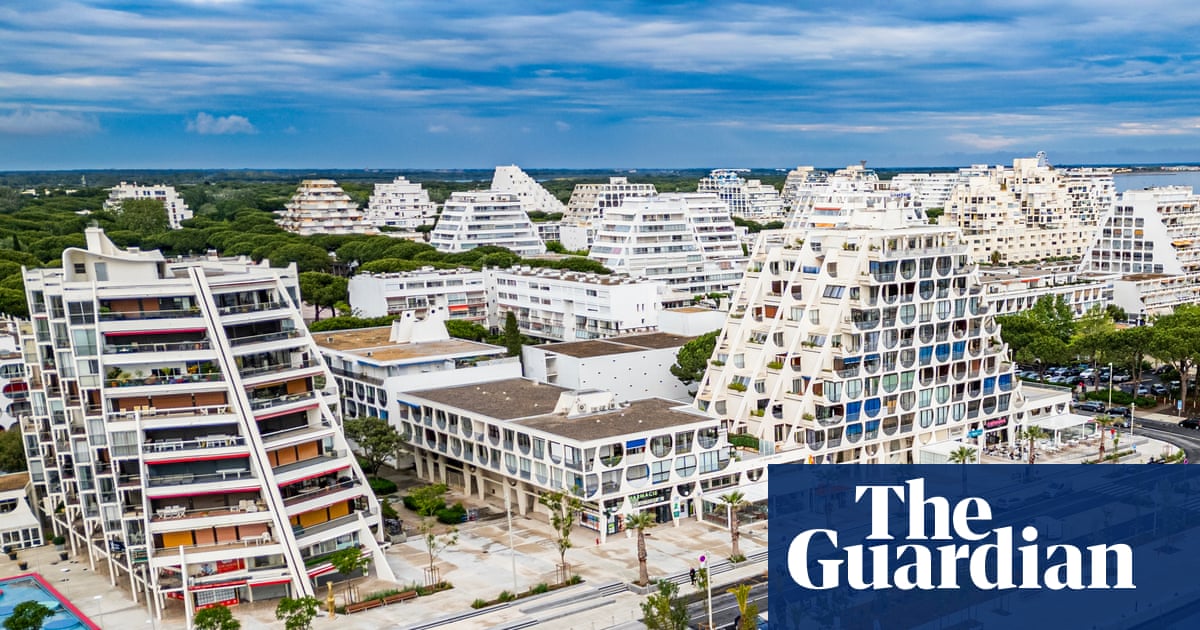
La Grande-Motte, a purpose-built seaside resort 20 kilometers from Montpellier, has emerged as a premier destination for architourism enthusiasts seeking authentic retro-futurism. Designed in the 1960s and developed through the 1970s, the town's striking geometric architecture—dominated by distinctive pyramid and cone-shaped buildings—offers visitors a tangible glimpse into how mid-century planners imagined future living.
Key takeaways
La Grande-Motte's iconic pyramidal structures represent a bold experiment in modernist urban planning and resort development from the 1960s-70s era.
The town attracts architecture students, design historians, and Instagram-savvy travelers seeking immersive retro-futuristic experiences beyond conventional beach tourism.
Its preservation status protects original architectural features while the town balances heritage conservation with contemporary hospitality infrastructure.
The resort exemplifies how European coastal development prioritized architectural vision alongside leisure, contrasting with contemporaneous American seaside commercialization.
Architourism—travel centered on experiencing notable buildings and urban design—has accelerated significantly across Europe. La Grande-Motte capitalizes on this trend by offering visitors walkable access to intact mid-century modern structures, including residential towers, commercial plazas, and public spaces largely unchanged since their completion. The town's homogeneous aesthetic creates an immersive environment rather than scattered landmarks.
Beyond photography and architectural study, La Grande-Motte functions as an active seaside destination with 9 kilometers of Mediterranean beaches, restaurants, and accommodations spanning boutique to budget categories. The convergence of architectural significance and practical tourism amenities distinguishes it from museum-based heritage sites, enabling multi-day visits focused on design appreciation without sacrificing comfort or local dining.
Tourism boards and regional development agencies increasingly recognize architourism's economic potential. La Grande-Motte's revival as a destination suggests similar undervalued modernist resorts across southern France—and Europe broadly—may experience renewed attention as travel preferences shift toward experiential, educational content and away from mass-market resort chains.