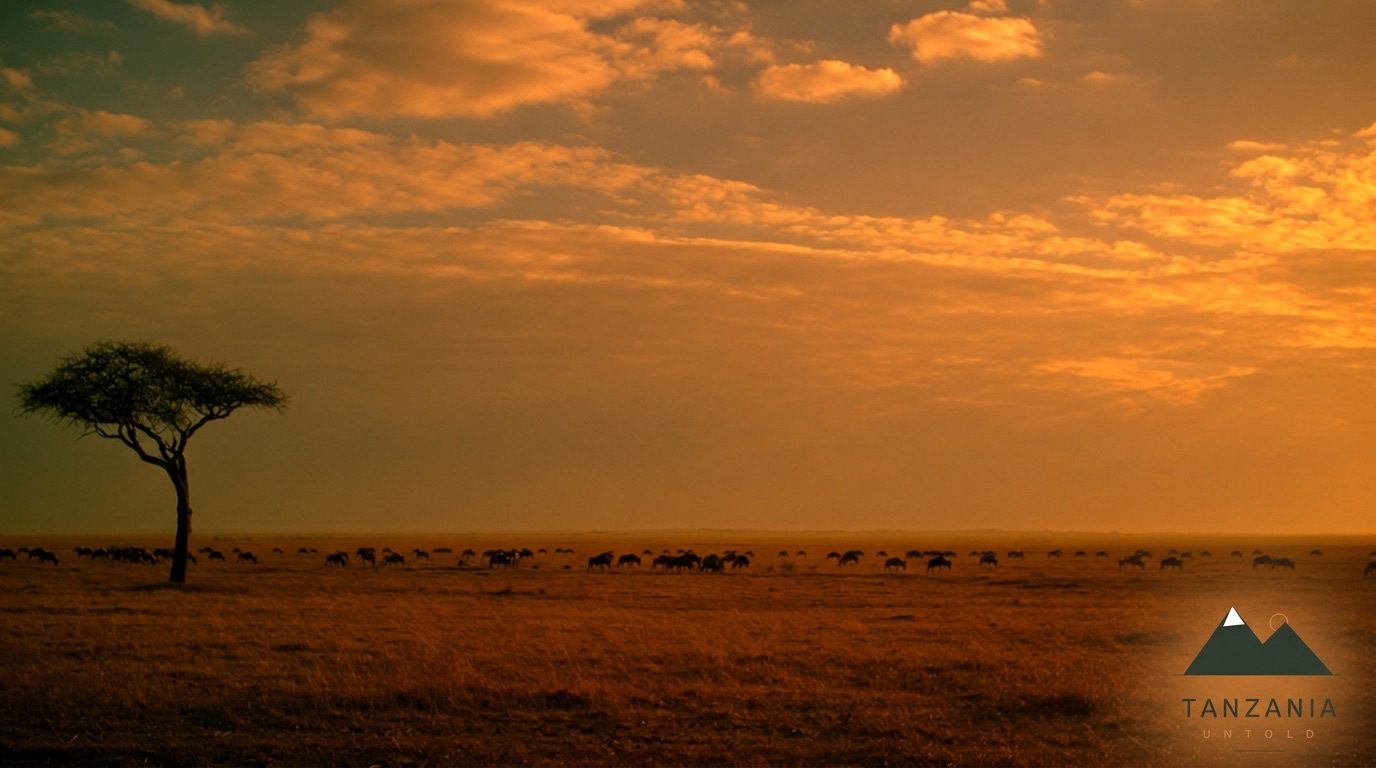
There's a particular kind of silence that settles over the Serengeti at dawn, just before the light breaks gold across the grass and the plains begin to move. Not the silence of emptiness, but of anticipation — because in a few hours, this same ground will be alive with one of the largest concentrations of wildlife left on Earth. For most travelers, the Serengeti isn't just a stop on a Tanzania itinerary. It's the reason the itinerary exists.
A Landscape Built for Movement
The name itself comes from the Maasai word siringet, meaning "the place where the land runs on forever," and it's hard to find a more accurate description. The Serengeti ecosystem spans nearly 30,000 square kilometers of savannah, woodland, and river valley across northern Tanzania, stretching into Kenya's Maasai Mara. It's this scale, more than anything else, that makes the park so extraordinary. There are no fences here, no forced boundaries — just an open system where animals move according to rain, grass, and instinct rather than the lines humans have drawn on a map.
That openness is what makes the Great Migration possible. Each year, roughly two million wildebeest, along with hundreds of thousands of zebra and gazelle, move in a continuous loop through the Serengeti and Maasai Mara, chasing fresh grazing and fleeing the dry season. It's not a single event but a year-round rhythm: calving season on the southern plains between January and March, the northward push through April and May, and the tension-filled river crossings at the Grumeti and Mara from June through September. Depending on when you visit, you're stepping into a completely different chapter of the same story.
More Than the Migration
It's easy to let the migration overshadow everything else the Serengeti offers, but the park rewards travelers who slow down. The central Seronera region, threaded by the Seronera River, holds resident wildlife year-round and is one of the most reliable places on the continent to spot lion prides lounging in acacia trees or leopards draped over low branches. Cheetahs favor the open plains of the south, where they can use their speed to full advantage, while the western corridor, closer to Lake Victoria, offers a quieter, greener version of the park that many first-time visitors never see.
Birdlife deserves its own mention too. Over 500 species have been recorded in the Serengeti, from the outsized silhouette of the secretary bird stalking through grass to flashes of lilac-breasted rollers catching the light. For travelers who arrive expecting only lions and elephants, the sheer density of birdlife often becomes an unexpected highlight.
Getting the Timing Right
Because the Serengeti's character shifts so much with the seasons, timing matters more here than almost anywhere else on a Tanzania safari circuit. The dry season, from June to October, brings clearer skies, easier wildlife viewing, and the dramatic river crossings that have become the park's signature image. The green season, from November to May, trades some of that drama for lush scenery, fewer crowds, and better rates — plus the added spectacle of newborn wildebeest calves on the southern plains in February.
There's no single "best" time so much as a best time for what you want to see. Travelers chasing the crossing footage they've seen in documentaries should aim for July through September. Those more interested in birdwatching, photography without the crowds, or a gentler introduction to safari life often find the green season just as rewarding.
A Place That Resists Rushing
If there's one piece of advice worth repeating to anyone planning their first Serengeti trip, it's this: don't overpack the schedule. The temptation is to treat it like a checklist — see the lions, see the migration, move to the next park — but the Serengeti rewards patience. Some of the most memorable safari moments come from simply sitting still with your guide, engine off, watching a pride wake up or a herd shift direction for no reason anyone can quite explain.
The Serengeti isn't trying to perform for visitors. It's simply continuing a rhythm that's been running for millennia, long before safari vehicles and long after they're gone. Travelers lucky enough to witness even a small piece of it tend to come away understanding why so many people consider Tanzania's Serengeti not just a destination, but the benchmark against which every other safari is measured.
Planning your own Serengeti trip? Timing your visit around the migration, choosing the right region of the park, and picking the right camp can make the difference between a good safari and an unforgettable one — worth building into your itinerary from day one.