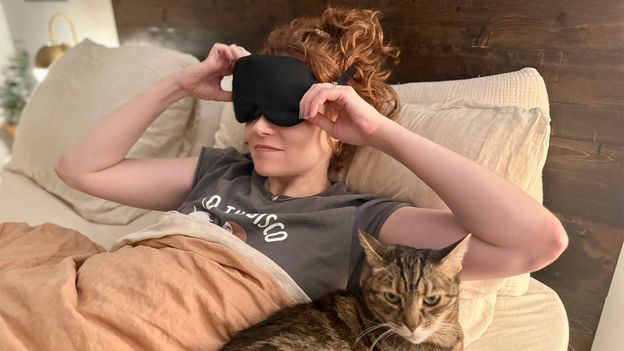
Most of us jolt awake to a blaring alarm, groggily fumbling for our phones. But what if your body could regulate its own wake time? One journalist recently discovered that mastering alarm-free mornings isn't about meditation or motivation—it's about respecting basic sleep physiology.
The experiment took just seven days. By addressing overlooked sleep essentials, natural waking became surprisingly reliable. The key insight: your circadian rhythm (the biological clock governing sleep-wake cycles) responds predictably to environmental and behavioral cues. When those cues are consistent, your body anticipates wake time and naturally prepares for it.
What actually triggers natural waking?
Your circadian rhythm doesn't operate in isolation. Light exposure, sleep timing, and bedroom environment all send signals that synchronize your internal clock. When these signals align consistently, your body releases cortisol (a hormone that promotes alertness) at a predictable time each morning.
Researchers recommend two non-negotiable practices: blackout blinds at night to deepen sleep quality, and opening them immediately upon waking to anchor your circadian rhythm to real dawn. This light-dark cycle is more powerful than most people realize. Your eyes contain specialized cells that detect light intensity and directly communicate with brain regions controlling sleep-wake timing.
Does willpower matter, or is it all biology?
The honest answer: biology does the heavy lifting. The experiment succeeded not through determination, but through eliminating sleep disruptors. Consistent bedtimes, minimal screen time before bed, and optimized room temperature all reduced sleep fragmentation, meaning deeper, more restorative rest.
When sleep quality improves, your nervous system becomes more attuned to subtle morning cues—birdsong, gradual ambient light, even your own body's metabolic shifts. This heightened sensitivity makes natural waking feel effortless rather than forced. It's not about training your mind; it's about giving your body the conditions it needs to function as designed.

What's the broader implication?
This finding challenges how we approach sleep technology and productivity. Alarm clocks are crude instruments—they interrupt sleep cycles regardless of where you are in your sleep stage. Waking during deep sleep leaves you groggy and disoriented, even after eight hours. Natural waking, by contrast, typically occurs during lighter sleep phases, resulting in genuine alertness within minutes.
For anyone struggling with grogginess, sleep debt, or feeling perpetually exhausted, the intervention isn't a new app or gadget. It's respecting the circadian system you already possess. Seven days of consistent sleep hygiene can reset patterns disrupted by years of irregular schedules and artificial lighting. That's not a revolution—it's biology working as intended.