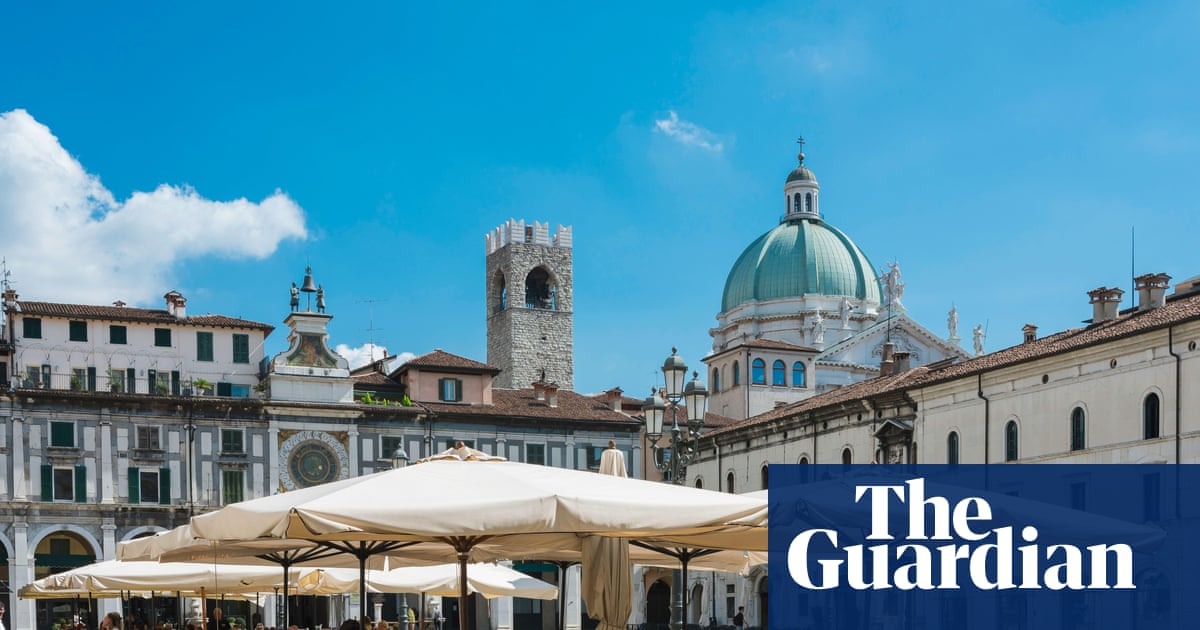
Brescia sits quietly in northern Italy's Lombardy region, overshadowed by Milan's fashion fame and Venice's canal romance. Yet this medieval city packs the full Italian experience into a compact, walkable center—Renaissance palaces, Michelin-starred restaurants, Roman ruins, and mountain access—without the tourist saturation that defines Italy's headline destinations.

What makes Brescia different from other Lombardy cities?
Unlike Milan's corporate sprawl or Como's resort-town feel, Brescia has retained its civic soul. The city's centro storico showcases layered history: medieval towers dating to the 12th century, a Venetian fortress from the 1500s, and Roman temples from the 1st century. The Piazza della Loggia stands as the architectural heart—a Renaissance square that rivals smaller Italian towns but draws a fraction of their visitors.
The city's culinary reputation ranks among Italy's finest. Four Michelin-starred establishments operate within city limits, specializing in Lombard cuisine that blends Alpine ingredients with Mediterranean technique. Local wines from nearby Franciacorta vineyards hold their own against Tuscan counterparts at a third of the price.
Which museums and attractions warrant a visit?
The Brescia Art Museum (Pinacoteca Tosio-Martinengo) houses works by Raphael, Tintoretto, and Caravaggio in an 18th-century palace. Admission typically runs €12, compared to €18+ in Venice or Florence. The Roman Forum lies beneath Piazza del Foro, accessible through guided excavations that illuminate the city's imperial past.
For contemporary culture, the Museo di Santa Giulia occupies a sprawling convent complex and traces Brescia's evolution from Roman settlement through the Renaissance. The monastery church features original 8th-century mosaics—a rarity in northern Italy.
How accessible is Brescia for travelers?
Direct trains connect Brescia to Milan (1 hour), Venice (2.5 hours), and Switzerland. The city's compact layout means most attractions cluster within a 15-minute walk. Accommodation ranges from €60-nightly budget hostels to €200+ design hotels, with numerous family-run B&Bs in the €80-120 range.
Summer temperatures average 28°C; spring and autumn provide ideal visiting conditions with fewer crowds. Regional passes offer unlimited train travel through Lombardy at €40-80 for multi-day visitors, enabling day trips to Lake Garda's northern shore or Franciacorta's wine country.
Why haven't more travelers discovered Brescia?
Marketing matters. Italy's tourism apparatus channeled international promotion toward Milan, Venice, and Florence for decades, leaving secondary cities underfunded for global campaigns. Brescia only recently invested in English-language tourism infrastructure and online presence.
This oversight becomes an advantage for travelers seeking authentic experiences over Instagram checkpoints. Restaurants serve locals first, tourists second. Street performers don't cluster around attractions. Hotel rates remain stable year-round because seasonal demand spikes don't occur.